Original article
The early breakup of the Missouri and Heart Rivers in March brought the highest watermark for flooding in the city since 1881, suspending mail and rail connections with the east.
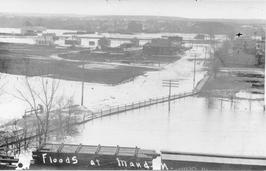
Water overflowed 2 feet above the dykes and flooded the south side of the city, inluding the Syndicate section. The grandstand at the fairgrounds was snapped in two, and the judges stand floated off into the woods.Large floating chunks of ice snapped electric light and telegraph and telephone poles. Electricity was partially restored by tying into the electrical power from the NP roundhouse. Click to Open
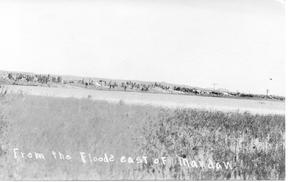
Click to Open A large crowd of people lined the dykes to watch a work crew of 900 men clear the ice jams off the NP tracks. In some areas between downtown and the river bridge, ice piled to heights from six to 10 feet high.Many of the ice cakes were 30 feet long. Dynamite was often used to dislodge and crumble the masses of ice.
Copy-edited article
The early breakup of the Missouri and Heart rivers in March brought the highest water level for flooding in the city since 1881, suspending mail and rail connections with the east.
Water rose 2 feet above the dikes and flooded the south side of the city, including the Syndicate section. The fairgrounds grandstand snapped in two, and the judges’ stand floated into the woods. Large chunks of floating ice snapped electric-light, telegraph, and telephone poles. Electricity was partially restored by connecting to power from the Northern Pacific roundhouse.
A large crowd lined the dikes to watch a 900-man crew clear ice jams from the Northern Pacific tracks. In some areas between downtown and the river bridge, ice accumulated to heights of 6 to 10 feet. Many ice floes were 30 feet long. Workers often used dynamite to dislodge and break apart the masses of ice.