Original article
Mandan, and North Dakota as a whole, experienced a significant turnaround from the Great Depression and Dust Bowl, driven by a booming wartime economy, federal construction projects, and the expansion of rural electrification. And major events occurred in the city.
1940
In February, four Morton County area night club operators were each fined, paying $25 for each count of either Sabbath breaking and/or operating a dance on Sunday. Mike Guon was fined on both accounts. Joe Wetzstein, Charles Hawley and Irvin Young were each fined for a single violation.
1941
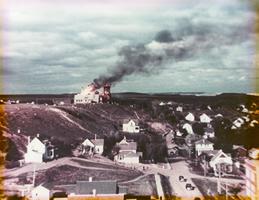
On May 15, the Morton County Courthouse located on north Collins Avenue and built in 1885 was completely destroyed by fire. The blaze began at 5:00 PM when residents noticed smoke rolling from the upper windows and roof. At the time, the county commissioners were still in session and were unaware of the fire. Even with the rapid response by the city's fire department, it was apparent the building would not be able to be saved. Efforts focused on protecting the adjacent jailhouse and sheriff's residence.
Outside of the of the records stored in fireproof vaults, only two adding machines and a few law books were saved. The building was insured for $60,000 ($1,320,000 2025$). Mandan recorded its second highest daily high temperature 109⁰F in August 5, 1941 at 2:00 PM at the weather bureau at the USDA Northern Great Plains Field Station research center.
1942
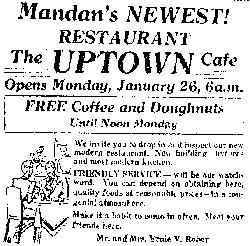
Among a surge of new cafe openings in early 1942, Ernie Rober and his wife opened the Uptown Cafe at 412 West Main Street, just west of the Lewis and Clark Hotel and across the street from the train depot. It is located in a new two-story tile and brick building built specifically for the purpose including all new funiture and equipment. The business seats 50 patrons. The chief chef was Brent Grant. (The building has hosted a series of taverns and eateries, including most recently the Roundup Bar and the current West Side Grill.)
Despite calls by the US Department of Defense to cancel all state and county fairs in support of the war effort to save tire rubber, the Mandan Rodeo Association responded "The Show Must Go On" and held the Fourth of July event as scheduled. More than 20,000 paid admissions were already in hand for the three day event. The largest crowd to date for the parade witnessed the marchers under clear skys and perfect 75 degree temperatures.
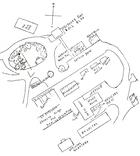
<Click to Enlarge> In late July, the last of the enrollees of the 260 Veterans Civilian Conservation Corps camp received their discharge this week after nearly eight years of continuous service. Opened in August 1934, camp workers were first used by the State Park Service and did much work of erecting buildings and landscaping at the Fort Abraham Lincoln State Park, south of Mandan. V2775 Camp Highlights by A-Olson
V2775 Camp Highlights by A-Olson
1944
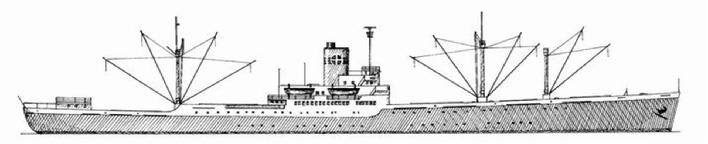
On May 26, 1944, Mandan joined a total of 218 American cities and towns with the honor of a "Victory Ship" named after it (Victory ships were "faster" versions of Liberty Ships.) The SS Mandan Victory was a VC2-S-AP3 launched by the Oregon Shipbuilding Corporation of Portland, OR and was added to the US Merchant Marine to support the war effort. Devils Lake and Dickinson also had a Victory Ship named after them.
1945
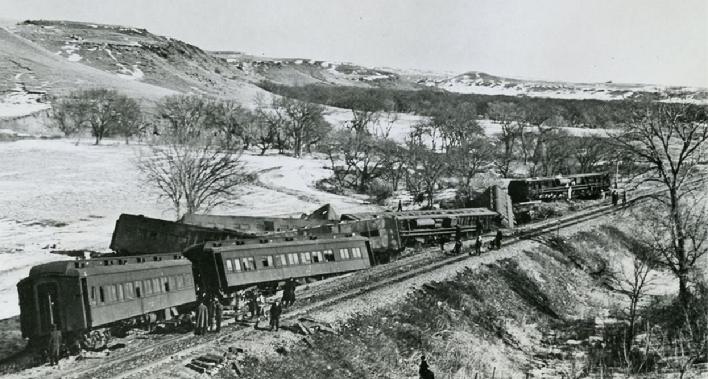
On February 20 at 5:20 PM, an east-bound 12-car troop train carrying a battalion (approximately 300) of African-American soldiers derailed 2 miles west of Lyons (i.e., 11 miles west of Mandan.) Ten coaches derailed injuring over 100 individuals, including five in critical condition. Only the engine and the rear two coaches remained upright. The injured were taken to area hospitals. The troops were quartered in the Mandan Memorial Building (today's City Hall.) Bedding and other materials were sent from Fraine Barracks. Meals were served in the Knights of Columbus Hall. The Mandan Red Cross also provided support with the effort.
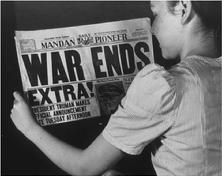
Residents celebrated with the rest of the nation when World War II ended on August 14 with Japan's agreement in principle to unconditional surrender. More than 64,000 North Dakotans served in the armed forces during the war, while thousands more moved to cities to work in war-related industries. An estimated 700 men and women from Mandan served in the Armed Services during this period.
The war also temporarily halted the construction of new electric lines, as materials were needed for the war effort. Following the war, the Rural Electrification Administration (REA) could focus its efforts to bring power to rural areas. Local cooperatives were formed, and construction began in earnest, with the first homes receiving power in 1946.
1946
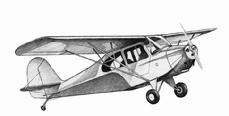
In May, Jim Myers and Dick Baron, both WWII veteran pilots, leased about 50 acres 1.5 miles east of Mandan on the north side of Highway 10 from Mrs. Blossom [Lang] McGillic and established the Missouri Valley Aviation School. They gave rides as well as flying lessons, provided charter service and field dusting. Aircraft based there included a new 1946 Aeronca Champ and Taylorcraft BC-12 Traveler.
1947
Extreme cold winter weather in February caused a record demand for natural gas. Two schools were temporarily closed to reduce load. Montana Dakota Utilities asked residents to cut the temperatures in their homes as much as possible to help their overburdened distribution system cope with the demand for natural gas.
1949
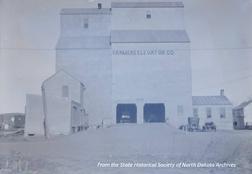
Mandan’s new gleaming white Farmers Union elevator at 211 East Main St. has opened in late August for the fall harvest. President of the Farmers Union group was L. F. Zander; Earl Schauss as Secretary-Treasurer; and Otto Hagerott, Ted Hagerott and Elias Ellison as members of the board of directors. The first receipt of wheat to the elevator came from the Zander farm. The first wheat received from the 1949 harvest weighed 60 lbs. and graded No.1 Hard Dark Northern, arrived from the John Keller farm. Elevator manager is John Calvin from Rawson in McKenzie County. He and his wife and young son temporarily resided in a small trailer near the elevator. Note: This elevator burnt to the ground in the 1970's.
Copy-edited article
Mandan, and North Dakota as a whole, experienced a significant turnaround from the Great Depression and Dust Bowl, driven by a booming wartime economy, federal construction projects, and the expansion of rural electrification. The decade also brought several major events to the city.
1940
In February, four Morton County nightclub operators were fined $25 for each count of violating Sabbath laws or operating a dance on Sunday. Mike Guon was fined on both counts. Joe Wetzstein, Charles Hawley, and Irvin Young were each fined for a single violation.
1941
On May 15, the Morton County Courthouse, built in 1885 on north Collins Avenue, was completely destroyed by fire. The blaze began at 5 p.m., when residents noticed smoke rolling from the upper windows and roof. County commissioners were still in session and initially unaware of the fire. Despite the city fire department's rapid response, it soon became apparent that the building could not be saved. Efforts focused on protecting the adjacent jail and sheriff's residence.
Aside from records stored in fireproof vaults, only two adding machines and a few law books were saved. The building was insured for $60,000 (about $1,313,000 in 2025 dollars).
On August 5, 1941, Mandan recorded its second-highest daily temperature, 109°F, at 2 p.m. at the USDA Northern Great Plains Field Station weather bureau.
1942
Amid a surge of new café openings in early 1942, Ernie Rober and his wife opened the Uptown Cafe at 412 West Main Street, just west of the Lewis and Clark Hotel and across from the train depot. It occupied a new two-story tile-and-brick building constructed for the business and furnished with all-new equipment. The café seated 50 patrons, and Brent Grant was the head chef. The building later housed a series of taverns and eateries, including the Roundup Bar and West Side Grill.
Despite federal calls to cancel state and county fairs to conserve tire rubber for the war effort, the Mandan Rodeo Association responded, "The show must go on," and held its Fourth of July event as scheduled. More than 20,000 paid admissions were already in hand for the three-day event. The parade drew its largest crowd to date under clear skies and a temperature of 75 degrees.
In late July, the last enrollees at the 260-member Veterans Civilian Conservation Corps camp were discharged after nearly eight years of continuous service. The camp opened in August 1934. Its workers initially served the State Park Service, erecting buildings and completing landscaping at Fort Abraham Lincoln State Park south of Mandan.
V2775 Camp Highlights by A. Olson
1944
On May 26, 1944, Mandan joined 218 American cities and towns honored with a Victory ship bearing its name. Victory ships were faster successors to Liberty ships. The SS Mandan Victory, a VC2-S-AP3 built by the Oregon Shipbuilding Corporation of Portland, Oregon, was launched for service with the U.S. Merchant Marine in support of the war effort. Victory ships were also named for Devils Lake and Dickinson.
1945
On February 20 at 5:20 p.m., an eastbound 12-car troop train carrying a battalion of approximately 300 African American soldiers derailed 2 miles west of Lyons, or 11 miles west of Mandan. Ten coaches left the tracks, injuring more than 100 people, five critically. Only the engine and rear two coaches remained upright. The injured were taken to area hospitals, while the troops were quartered in the Mandan Memorial Building, now City Hall. Fraine Barracks supplied bedding and other materials, meals were served in the Knights of Columbus Hall, and the Mandan Red Cross assisted with the response.
Residents celebrated with the rest of the nation when World War II ended on August 14 with Japan's agreement in principle to unconditional surrender. More than 64,000 North Dakotans served in the armed forces during the war, while thousands more moved to cities to work in war-related industries. An estimated 700 men and women from Mandan served in the armed forces during this period.
The war also temporarily halted the construction of new electric lines, as materials were needed for the war effort. Following the war, the Rural Electrification Administration (REA) could focus its efforts to bring power to rural areas. Local cooperatives were formed, and construction began in earnest, with the first homes receiving power in 1946.
1946
In May, World War II veteran pilots Jim Myers and Dick Baron leased about 50 acres from Mrs. Blossom [Lang] McGillic, 1.5 miles east of Mandan on the north side of Highway 10, and established the Missouri Valley Aviation School. They offered rides, flying lessons, charter service, and crop dusting. Aircraft based there included a new 1946 Aeronca Champ and a Taylorcraft BC-12 Traveler.
1947
Extreme cold winter weather in February caused a record demand for natural gas. Two schools were temporarily closed to reduce load. Montana-Dakota Utilities asked residents to cut the temperatures in their homes as much as possible to help their overburdened distribution system cope with the demand for natural gas.
1949
Mandan's gleaming new white Farmers Union elevator at 211 East Main Street opened in late August for the fall harvest. L. F. Zander was president of the Farmers Union group; Earl Schauss was secretary-treasurer; and Otto Hagerott, Ted Hagerott, and Elias Ellison served on the board of directors. The elevator's first load of wheat came from the Zander farm. The first wheat received from the 1949 harvest came from the John Keller farm, weighed 60 pounds per bushel, and graded No. 1 Hard Dark Northern. Elevator manager John Calvin, from Rawson in McKenzie County, temporarily lived with his wife and young son in a small trailer near the elevator. The elevator burned to the ground in the 1970s.