Original article
Elijah Boley and son Alphonse came to Mandan in 1877. Their arrival caused quite a stir then their wagon was pulled by horses, not oxen. Elijah and Alphonse Boley were instrumental in the development of horse racing in the area, and events which evolved into and Mandan's rodeo."Older than the Oldest Rodeo" Mandan's rodeo began as competition held in conjunction with Mandan's community fair first held on July 5, 1879. Events included pony races, a baseball game and a showcasing of area rancher's roping skills. A newspaper article in 1882 was the first publication which formally identified a rodeo as part of the event. Some years, only animal related competition mentioned in newspaper accounts was the horse race. In the early 1890s, the two highlights of the day's celebration was the parade and the baseball game. Children's games and shooting contests are also frequently mentioned. The Dakota Territorial Legislature approved an act on April 25, 1885, signed by Governor Pierce, to create a Board of Agriculture for the purpose of “forwarding the interests of agriculture, horticulture, manufacturing, and domestic arts.” The principal function of the Board was to organize and maintain an annual exhibition of the products of the territory in agriculture, stock raising, and other lines to be known as the “Annual Territorial Fair.” The site of the Fair was not designated, and there was keen competition among the larger towns of the territory. Mandan hosted North Dakota’s first ever State Fair, beginning in 1897. From 1897 to 1905, Mandan continued to host the fair, operated with $1,250 from the State Legislature. During the 1920s, four cities in the state claimed to host the State Fair, including Minot which held its first event in 1922.Even after the event lost its official "State Fair" designation, annual celebrations continued at the fairgrounds as the Missouri Slope Fair until it was discontinued in 1932.
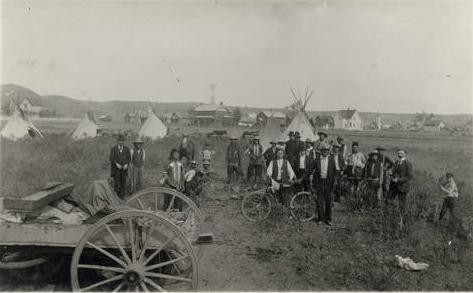
The Morton County Fair Association was incorporated in July 1895 with George Harmon as president, A. E. Thorberg, vice-president and C. L. Timmerman as secretary. Articles of incorporation were prepared by T. C. Kennelly, W. S. Barrows and Elijah Boley.
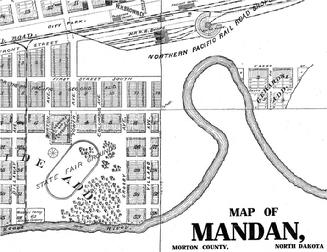
Plans made for a fall fair that year at the Heart River fairgrounds in southwest Mandan between the Heart River and Main Street. The property was reportedly donated by members of the Boston Syndicate with the stipulation that a fair be held each year. The site was prepared by enclosing it with an fence and installing an oval track with a layer of clay over one of sand. The work was completed by 16 teams of volunteers with a total of $400 being allowed for the entire track. Subscriptions totaling $2225 were collected.
Invitations were sent to area clergymen, ND Stock Growers Association, and the Wool Growers Association. Letters containing tags for grain exhibits were mailed to farmers. The Dickinson band was procured and ND Governor Allin was the guest speaker at opening day ceremonies.About two dozen Mandan men and women were named superintendents of various exhibit departments. Scores of prizes were awarded for grain and vegetable exhibits, horses, cattle and swine exhibits for various horse races, and in the women's depart for jellies, cakes, crocheting and associated handiwork, carpet weaving, oil and water paintings, painted chinaware, flowers and dried floral exhibits among others.Unique was the baby department in which prizes were awarded for heaviest baby, prettiest daughter, prettiest hair and eyes, best natured baby, sweetest smile and best all around baby.
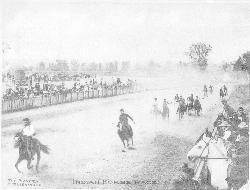
Prizes were typically donated by local businesses. The Fair was successful both financially and in terms of regional participation. Receipts totaled $4181 and covered its expenses. The Fair features roping and horse racing events.The 1904 North Dakota State Fair and was the last which permitted the roping of big range steers.
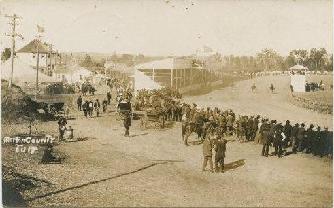
As vice-president of the State Fair Association and prominent horse rancher from Flasher, Stephen P. Weekes was instrumental in the event’s development, along with his sons, Steve and Charlie. Weeke's son-in-law, Max Theil, created the "Heart River Roundup" in about 1918 and “Badlands Bill” McCarty joined the association and promoted the moniker "Mandan Roundup" starting in 1923.
Copy-edited article
Elijah Boley and his son Alphonse came to Mandan in 1877. Their arrival caused quite a stir because their wagon was pulled by horses rather than oxen. The Boleys were instrumental in developing horse racing and the events that evolved into Mandan's rodeo.
Promoted as "Older than the Oldest Rodeo," Mandan's rodeo began with competitions held alongside the community fair first held on July 5, 1879. Events included pony races, a baseball game, and demonstrations of area ranchers' roping skills. An 1882 newspaper article was the first publication to formally identify a rodeo as part of the event. In some years, horse racing was the only animal-related competition mentioned in newspaper accounts. During the early 1890s, the day's highlights were the parade and baseball game. Children's games and shooting contests were also frequently mentioned.
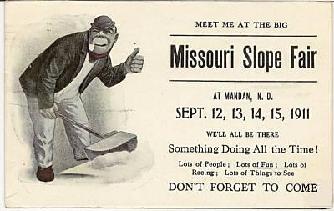
On April 25, 1885, the Dakota Territorial Legislature approved an act, signed by Governor Pierce, creating a Board of Agriculture to advance agriculture, horticulture, manufacturing, and domestic arts. Its principal function was to organize an Annual Territorial Fair exhibiting the territory's agriculture, livestock, and other products. The act did not designate a location, prompting keen competition among the territory's larger towns. Mandan began hosting North Dakota's State Fair in 1897 and continued through 1905, supported by $1,250 from the State Legislature. During the 1920s, four North Dakota cities claimed to host the State Fair, including Minot, which held its first event in 1922. After the Mandan event lost its official State Fair designation, annual celebrations continued at the fairgrounds as the Missouri Slope Fair until 1932.
The Morton County Fair Association was incorporated in July 1895 with George Harmon as president, A. E. Thorberg as vice president, and C. L. Timmerman as secretary. T. C. Kennelly, W. S. Barrows, and Elijah Boley prepared the articles of incorporation.
Plans were made for a fall fair that year at the Heart River fairgrounds in southwest Mandan, between the river and Main Street. Members of the Boston Syndicate reportedly donated the property with the stipulation that a fair be held each year. The site was enclosed, and an oval track was built with clay laid over sand. Sixteen volunteer teams completed the work, with $400 allotted for the track. Subscriptions totaling $2,225 were collected.
Invitations were sent to area clergymen, the North Dakota Stock Growers Association, and the Wool Growers Association. Tags for grain exhibits were mailed to farmers. The Dickinson band was hired, and North Dakota Governor Allin was the guest speaker at the opening-day ceremonies. Approximately two dozen Mandan residents served as superintendents of exhibit departments. Scores of prizes were awarded for grain and vegetable exhibits; horses, cattle, and swine; horse races; and entries in the women's department, including jellies, cakes, crocheting, handiwork, carpet weaving, paintings, decorated chinaware, and flowers. A baby department awarded prizes for such distinctions as the heaviest baby, prettiest daughter, prettiest hair and eyes, best-natured baby, sweetest smile, and best all-around baby.
Local businesses typically donated prizes. The fair was successful both financially and in terms of regional participation. Receipts totaled $4,181 and covered its expenses. The fair featured roping and horse-racing events. The 1904 North Dakota State Fair was the last to permit roping large range steers.
As vice president of the State Fair Association and a prominent horse rancher from Flasher, Stephen P. Weekes was instrumental in developing the event, along with his sons Steve and Charlie. Weekes's son-in-law, Max Theil, created the "Heart River Roundup" around 1918. "Badlands Bill" McCarty joined the association and began promoting the name "Mandan Roundup" in 1923.