Original article
Henry Waldo Coe was born in Waupon, Wisconsin, on November 4, 1857 to Dr. Samuel Buel Coe and his wife Mary Jane (Cronkhite), oldest of six children, one of three out of four sons who all eventually followed their father into the medical profession. His father was a pioneer doctor in Wisconsin and served as a surgeon in the Union army during the Civil War. His parents moved to Morristown, Minnesota, when Coe was five. After graduating from the local high school, Coe took liberal arts courses at the University of Minnesota. He eventually transferred to the University of Michigan-Ann Arbor to study medicine and completed part of his internship under the tutelage of his father.
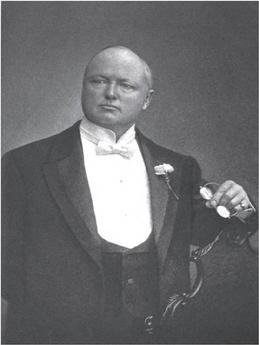
Their partnership continued as both arrived in Dakota Territory in the spring of 1879 by railcar in Valley City. They brought a foot powered printing press clandestinely owned by railway agent C.F. Kindred. Very little settlement had occurred despite the railroad's presence in Valley City for over seven years. Henry Coe published the first issue of the Northern Pacific Times on May 12, 1879. As much promotional handbill as newspaper, it extolled the virtures of the Sheyenne Valley. After copies were sent "out East," settlers began to arrive within months. His father Samuel remained in Valley City, served on the committee to spearhead the city's incorporation in 1881 and was elected to the first city commission. Samuel Coe also served as editor of the newspaper until 1880.
In October 1879, the paper explained "Dr. H. W. Coe was in the East courting his girl" when he was unavailable to care for a gunshot victim. Henry finished his formal medical education, graduating from Long Island (NY) College Hospital in July 1880. Henry returned to Dakota Territory to provide medical care to the Railway's construction crews through 1883. But he eventually established his own private practice in Mandan.While Henry Coe was one of the first physicians to settle in North Dakota, like his father, he didn't just "doctor." The first recorded civic service for was on May 3, 1881 when the Mandan Village Trustees appointed him city clerk. He was one of the directors of Mandan's first school board. Coe later served as mayor of Mandan from 1886-1889, elected as a member of the "Knights of Labor" party. In 1890 Coe was elected president of the ND State Medical Association, and appointed Superintendent of the ND State Board of Health.
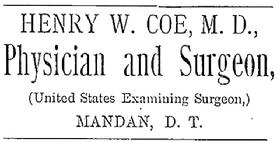
Advertisement in 1883 Mandan Pioneer In 1884 he had been elected to the last territorial legislature (1885), before Dakota Territory was divided. One important bill he co-sponsored with Seth Peterson (then editor of the Valley City newspaper he started) regulated the licensing of individuals who desired to practice medicine in the Territory.
After his apparent failure to win over his girl "out East", Henry redirected his efforts locally. While initially among the innumerable single men in the frontier town, on June 20, 1882 he married Viola Mae Boley, whose parents were among the earliest pioneers to the area. Mrs. Coe would later provide the organ music for the first Fourth of July celebration in Mandan. Her father Elijah had brought an organ with them from Ohio.In 1884, Coe met a young Theodore Roosevelt who was here trying to regain his health. Aside from his personal friendship, Henry Coe admired Roosevelt's politics. Theodore was a deputy sheriff of Morton County which at one time extended to the Montana border and Roosevelt routinely traveled to the county seat at Mandan. Even after the county was subdivided, TR lived in a part of the district Coe represented in the Dakota Territorial Legislature. Their friendship lasted until Roosevelt's death in 1919.Dr. Coe and his family primarily lived at 203 2nd St NW and at the time, the stable at the rear of the house kept the doctor's team and buggy ready for any emergency trip into the country-side.
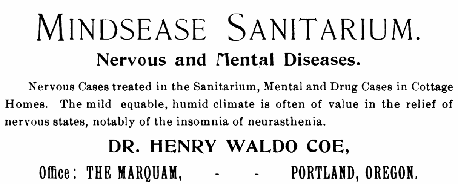
Henry and Viola Coe moved to Portland in 1891 where he focused his practice on treating nervous and mental diseases and owned and operated Morningside Hospital there. In January 1893 he established The Medical Sentinel, an independent medical magazine. Ad from American Journal of Insanity
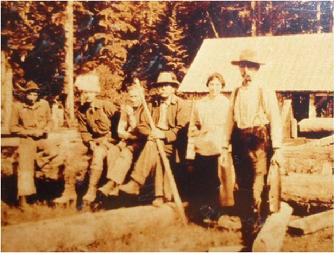
Coe (center with hat) posing with Robert and Minnie Lange and mine workers c. 1906 Coe had other business interests in the area. Henry Waldo Coe was the owner and operator of the Mount St. Helen's Consolidated Mining Company. Copper, gold and silver plus an assortment of non-metal minerals were discovered in commercial quantities on east side of the Spirit Lake, in the shadow of Mt. St. Helens. Mining peaked in the area between 1902 through 1908.His involvement in the Washington mining industry is highlighted in the Mt. St. Helens Visitor Center operation by the US Park Service.
Coe served in the Oregon state senate in 1894 and later as Oregon's US Senator. Dr. Coe served as president of the City and County Medical Association and was a professor of medicine at Willamette University in Salem, OR. He was one of the party leaders of the national Progressive Party (i.e. "Bull Moose Party") in the early 1900s. He served a president of Oregon's Roosevelt League. He and his wife would be invited on numerous occassions to lunch at the White House, as guests of both President Theodore Roosevelt and Howard Taft.
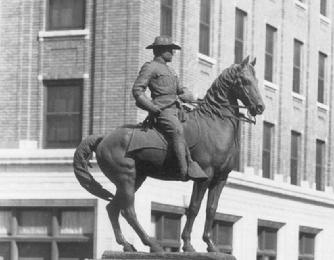
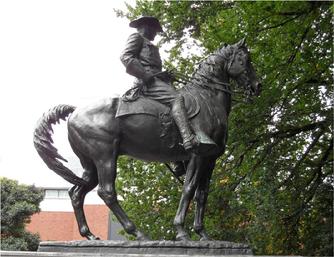
Mandan Statue Portland Statue
Coe had a statue of Theodore Roosevelt made (by Phimister Proctor) and donated it to the city of Portland. He also donated a smaller version of this "Roughrider" statue to Mandan in 1924. It stands today in the ellipse driveway in front of the Railroad Depot on Main Street West.In addition to the statue of Theodore Roosevelt, other statues which he donated to Portland were George Washington (by Pompeo Coppini), Abraham Lincoln (by George Fite Waters), and Joan of Arc (by Emmanuel Fremiet). Coe had three sons from his marriage with Viola Mae Boley; George Clifford born on January 17, 1885 in Mandan; Wayne Walter Coe born October 10, 1894 in Portland; and Earl Alphonso born August 7, 1896 in Portland. Viola Boley Coe was also educated as a medical doctor, graduating from Woman's Hospital Medical College of Chicago. While living in Oregon, she focused on philanthropic activities. However her and her husband were among a group assigned in 1907 to travel to Panama to report to then President Theodore Roosevelt on working conditions during the construction of the Panama Canal.After a very public divorce, on March 25, 1915, Henry Coe married Miss Elsie Ara Waggoner of Los Angeles. He retired from active practice in 1920, and he and Elsie traveled extensively in Europe, Africa, Asia and South America.He died on February 15, 1927 while undergoing medical treatment in Glendale, CA. When his funeral was held later in Portland, flowers were reportedly sent from every state in the Union.
The Society appreciates information from the University of Oregon Libraries used in this Legacy Program biography. Dr. Coe's association with the Northern Pacific Times newspaper as well as his father's involvement in Valley City history is courtesy of the Barnes County Historical Society.
Copy-edited article
Henry Waldo Coe was born November 4, 1857, in Waupun, Wisconsin, to Dr. Samuel Buel Coe and Mary Jane Cronkhite Coe. Henry was the eldest of six children. Three of the couple's four sons followed their father into medicine. Samuel was a pioneer Wisconsin physician and served as a Union Army surgeon during the Civil War.
The family moved to Morristown, Minnesota, when Henry was five. After high school, he studied liberal arts at the University of Minnesota, transferred to the University of Michigan at Ann Arbor for medicine, and completed part of his internship under his father.
Father and son arrived by rail in Valley City, Dakota Territory, in spring 1879, bringing a foot-powered printing press secretly owned by railroad agent C. F. Kindred. Despite seven years of railroad access, Valley City remained sparsely settled. Henry published the first Northern Pacific Times on May 12, 1879. Part newspaper and part promotional handbill, it praised the Sheyenne Valley. Settlers began arriving within months after copies circulated in the East.
Samuel remained in Valley City, helped organize its 1881 incorporation, and served on the first city commission. He also edited the newspaper until 1880.
Henry completed his medical education at Long Island College Hospital in New York in July 1880 and returned to Dakota Territory. He treated Northern Pacific construction crews through 1883 and then established a private practice in Mandan.
Coe was among North Dakota's first physicians but, like his father, pursued broader interests. Mandan's village trustees appointed him city clerk May 3, 1881. He served on the city's first school board and as mayor from 1886 through 1889 after election on the Knights of Labor ticket. In 1890, Coe became president of the North Dakota State Medical Association and superintendent of the State Board of Health.
Coe was elected in 1884 to the last Dakota Territorial Legislature before division of the territory. With Seth Peterson, editor of the Valley City newspaper Coe had founded, he sponsored legislation regulating medical licenses.
Coe married Viola Mae Boley on June 20, 1882. Her family was among the region's earliest pioneer settlers. Viola played organ music at Mandan's first Independence Day celebration using an instrument her father, Elijah Boley, had brought from Ohio.
Coe met Theodore Roosevelt in 1884 while Roosevelt was in the region recovering his health. Roosevelt served as a Morton County deputy sheriff and frequently traveled to the county seat in Mandan. He also lived within Coe's territorial legislative district. Their friendship continued until Roosevelt's death in 1919.
The Coe family primarily lived at 203 Second Street Northwest. A stable behind the house kept the doctor's horses and buggy ready for emergency trips into the countryside.
Henry and Viola moved to Portland, Oregon, in 1891. He specialized in nervous and mental illnesses and owned Morningside Hospital. In January 1893, he founded The Medical Sentinel, an independent medical magazine.
Coe also owned and operated Mount St. Helens Consolidated Mining Company. Commercial quantities of copper, gold, silver, and nonmetallic minerals were discovered east of Spirit Lake beneath Mount St. Helens. Regional mining peaked between 1902 and 1908, and the Mount St. Helens Visitor Center later highlighted Coe's involvement.
Coe served in the Oregon Senate in 1894 and later as Oregon's U.S. senator. He led the City and County Medical Association and taught medicine at Willamette University in Salem. A national Progressive Party leader, he served as president of Oregon's Roosevelt League. Henry and Viola were invited to the White House on several occasions by Presidents Theodore Roosevelt and William Howard Taft.
Coe commissioned sculptor Alexander Phimister Proctor to create a statue of Theodore Roosevelt and donated it to Portland. In 1924, he gave Mandan a smaller version of the Rough Rider statue, now standing before the Northern Pacific depot. He also donated Portland statues of George Washington by Pompeo Coppini, Abraham Lincoln by George Fite Waters, and Joan of Arc by Emmanuel Frémiet.
Henry and Viola had three sons: George Clifford, born in Mandan in 1885; Wayne Walter, born in Portland in 1894; and Earl Alphonso, born in Portland in 1896. Viola earned a medical degree from Woman's Hospital Medical College of Chicago and concentrated on philanthropy in Oregon. In 1907, the couple joined a group sent to Panama to report to President Roosevelt on working conditions during canal construction.
After a public divorce, Coe married Elsie Ara Waggoner of Los Angeles on March 25, 1915. He retired from active practice in 1920, and the couple traveled extensively through Europe, Africa, Asia, and South America.
Coe died February 15, 1927, while receiving medical treatment in Glendale, California. At his Portland funeral, flowers reportedly arrived from every state.
The Society acknowledges information from the University of Oregon Libraries, as well as material from the Barnes County Historical Society about the Northern Pacific Times and Samuel Coe's role in Valley City.