Original article
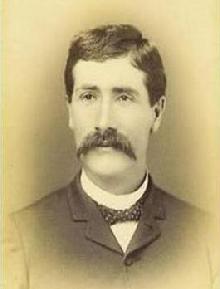
Lyman Cary was born on April 10, 1856 and grew up in Flanders, New Jersey. He attended Rensselaer Polytechnic Institute in upstate New York and graduated with a degree in civil engineering. In April 1881, when the rail tracks extended only 40 miles west of town, he arrived in Mandan at the age of 25 to seek his fortune. He was convinced, like others, that Mandan would become the "Omaha of the North" and was persuaded by investors out east to send for his surveying equipment. He is credited with platted the town of Sterling and parks of both Mandan and Bismarck. He was often paid for his work with lots from these developments.
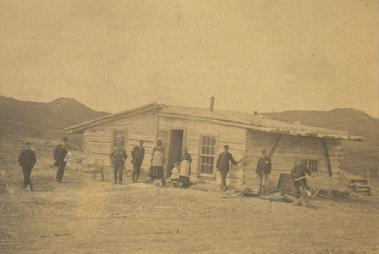
Initially, living quarters were very scarce. However the two young men found accommodations in a log rooming house which had a canvas roof, reportedly the first wood structure outside of the railyards. According to the report this roof was as hospitable to the rain and snow as it was to is lodgers. Undaunted by the inconvenience, the two men quickly dubbed their rooming house, "The Arlington" as the western counterpart of the fashionable Arlington Hotel in Washington, DC with which they were both familiar.
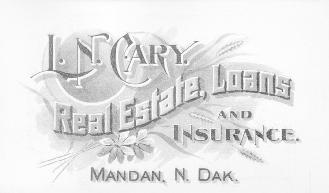
Cary initially partnered with Warren Carpenter and became the land agent for the Northern Pacific Railroad. Their territory extended from the Missouri River to the Montana line. To compensate the railroad company for their risk in undertaking the construction of the line, the government had awarded the NPRR every odd numbered section of land for fifty miles on each side of the tracks.
Railroads, through land agents such as Lyman Cary, would subsequently resell the land to settlers to finance the construction of the railway. The Northern Pacific Railroad had recruiters in Europe encouraging immigration to the United States. Cary sold thousands of acres at $2.60 to $3.00 per acre - an investment which could be recouped with just one good crop. After completing the real estate transactions for the railroad, Cary moved on to become the land agent for "the Syndicate" area of town which comprized the majority of southwest Mandan in and around the present day Mary Stark Elementary School area. "The Boston Syndicate" was a group of eastern investors who owned an operated a significant portion of the southwest area of Mandan including a brickyard. Mr. Cary also developed major portions of the downtown business district. Lyman Cary reportedly still holds the record for the most land sale transactions in the history of the state of North Dakota.In the early 1900s, Mr. Cary would sponsor a $100 prize to be awarded to the farmer producing the best corn sample displayed at the Morton County Fair. Lyman Cary married Anne Alison Clark, daughter of James Reed Clark a pharmacist and proprietor of Clark Drug Store in 1884. Lyman and Anne had five children; Ethelind (Little), Willam, Anne, Alison and Colin.
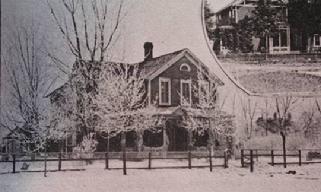
The couple were very active in the congregation of the First Presbyterian Church in Mandan. Lyman and Anne lived at 311 Third Ave NW. The house, originally built at 201 Seventh Ave NW, was moved by Cary in 1894 to this new location across the street and facing the First Presbyterian Church. The move was prompted by his wife's request, so she could be closer to their church and its activities. Their son Colin and wife owned the adjacent house at 309 Third Ave NW. The Cary home was torn down in May 1989. Cary House circa 1906
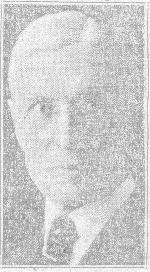
Anne Cary is given credit for suggesting the State of ND preserve the famed historic site Chateau De Mores at Medora. Her interest in the French nobleman's home stems from your recollections of 1885 when the grand jury met in Mandan to indict the Marquis for murder. Her father was the grand jury foreman. Mrs. Cary is also credited as being the first woman to be elected as forman of a trial jury in North Dakota history. She was active in a wide variety of civic organizations including Daughters of the American Revolution and the Pioneer Daughters. She was also an authority on local history. Lyman Cary died on April 15, 1929. He is buried in the family plot in Union Cemetery, Mandan, which Cary had selected when he had platted that area of town. The Cary Real Estate office was operated by his son, Colin Cary, until the mid 1960s.
Copy-edited article
Lyman Cary was born April 10, 1856, and grew up in Flanders, New Jersey. He graduated from Rensselaer Polytechnic Institute in New York with a civil-engineering degree.
Cary arrived in Mandan in April 1881 at age 25, when the railroad extended only 40 miles west of town. Like many others, he believed Mandan would become the “Omaha of the North.” Eastern investors persuaded him to send for his surveying equipment. He is credited with platting Sterling and parks in Mandan and Bismarck, often accepting development lots as payment.
Housing was scarce. Cary and another young man found a room in a log boardinghouse with a canvas roof, reportedly the first wooden structure outside the rail yards. The roof admitted rain and snow as readily as it accommodated tenants. The two jokingly called it the Arlington after Washington's fashionable Arlington Hotel.
Cary initially partnered with Warren Carpenter and became a Northern Pacific Railroad land agent. Their territory extended from the Missouri River to Montana. Federal land grants had given the railroad alternating sections within 50 miles of each side of its track to offset construction risks. Agents such as Cary resold the land to settlers to finance the railway.
Northern Pacific recruiters encouraged European immigration. Cary sold thousands of acres for $2.60–$3 per acre, an investment buyers could reportedly recover with one good crop.
Cary later became land agent for the Boston Syndicate, which owned much of southwest Mandan near today's Mary Stark Elementary School, including a brickyard. He also developed major portions of downtown and reportedly completed more land-sale transactions than anyone else in North Dakota history. In the early 1900s, he offered a $100 prize for the best corn sample displayed at the Morton County Fair.
In 1884, Cary married Anne Alison Clark, daughter of pharmacist James Reed Clark. They had five children: Ethelind Little, William, Anne, Alison, and Colin.
The Carys were active members of First Presbyterian Church. Their house, originally built at 201 Seventh Avenue Northwest, was moved in 1894 to 311 Third Avenue Northwest, across from the church, at Anne's request. Their son Colin and his wife later owned the adjacent house. The Cary residence was demolished in May 1989.
Anne Cary is credited with suggesting that North Dakota preserve the Chateau de Morès at Medora. Her interest came from memories of the Marquis de Morès's 1885 murder indictment in Mandan, where her father served as grand-jury foreman. Anne was also credited as North Dakota's first elected woman foreperson of a trial jury. She participated in civic organizations including the Daughters of the American Revolution and Pioneer Daughters and became an authority on local history.
Lyman Cary died April 15, 1929. He is buried in a Union Cemetery family plot he selected while platting that part of Mandan. His son Colin operated Cary Real Estate until the mid-1960s.