Original article
Mandan is associated with four of the thirty-one men who have served as Governor of North Dakota. One was born here; one died here; one moved here and one started his professional career here.
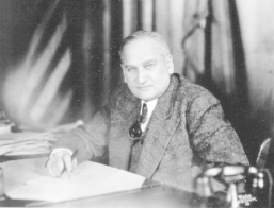
William Langer was born on a farm on September 30, 1886 near Casselton to Frank and Mary (Weber) Langer, one of six children. His father was also active in state and county politics and was a bank officer for the First National Bank of Casselton.Bill attended rural schools and graduated from Casselton High School as valedictorian in 1904. He obtained a bachelor of laws from the UND-Grand Forks in 1906 and passed the bar exam.
But at 18, he was too young to practice law in ND which required an age of 21. He continued his undergraduate education at Columbia University in New York where he graduated at the top of his class in 1910. Although offered a position at a prominent New York law firm, Langer chose to return to North Dakota.Settling in Mandan at a boarding house at 300 2nd Ave NW, he found work with H.R. Bitzing, the States Attorney for Morton County. He served as Assistant States Attorney until 1914, when he was appointed Morton County States Attorney. He quickly began to make a name for himself politically. He swore out 167 warrants for arrest of liquor dealers and vice operators on his very first day of work. He successfully sued Northern Pacific Railway for $1,250,000 in back taxes, establishing a reputation as an enemy of corporations.
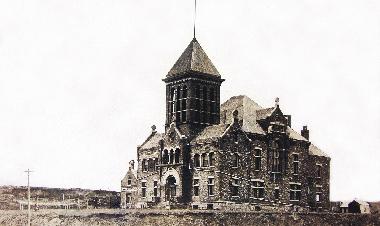
In 1915, Langer and S.L. Nuchols, another Mandan lawyer, formed the law firm of Langer and Nuchols. Langer was elected North Dakota Attorney General in 1916, an election in which defeated his opponent by over 58,000 votes and carried every county in the state. He was re-elected Attorney General in 1918 on the Non-Partisan League (NPL) ticket. Morton County Courthouse c. 1913 Click to Enlarge
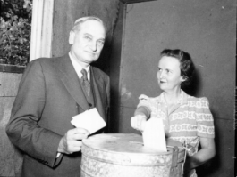
Bill and Lydia Langer voting in 1940 election On February 26, 1918, William Langer had married Lydia Cady in New York City in February 1918 while ND Attorney General. The daughter of prominent New York architect, the couple met in New York City while Langer was a student at Columbia. Langer was fond of recalling how he first spied Lydia at a concert, and then arranged for her date to be called away to answer a fake phone call. He went and introduced himself, which was the start of a long courtship. The couple had four daughters: Emma, Lydia, Mary and Cornelia.
In March 1920, Langer announced his candidacy for governor on the Progressive Republican ticket. Langer had defected from the NPL in 1919 accusing its leaders as selling out farmers. Langer was defeated by the NPL candidate, Lynn Frazier in a close election.Langer returned to his law practice and he and his partner moved their firm to Bismarck. The practice now benefited tremendously from Langer’s name recognition. He eventually rejoined the NPL and directly helped the party work through its financial issues. While he lost the primary for Attorney General in 1928 he did receive the 1932 gubernatorial nomination. Langer, along with all other major NPL candidates, was swept into power in the 1932 election.He was unwavering in his support of ND farmers. When the price of wheat fell low, Langer declared an embargo on North Dakota wheat until prices rose. He also declared a moratorium on farm foreclosures, even resorting to use of the National Guard to stop sheriffs' sales.Langer quickly ran into legal problems, however. After his inauguration, Langer cleaned out most executive departments and appointed persons loyal to him. He also openly solicited state employees for subscriptions to his newspaper, which represented about five percent of their annual state salary. Although Langer viewed this as a legitimate campaign fund raising, he was charged and found guilty of soliciting contributions illegally by a Federal court, sentenced to eighteen months in prison, and fined $10,000. The ND Supreme Court had him removed from office on the basis of his felony conviction. It would take three more trials, but eventually Langer was acquitted of all charges. Langer returned to serve as the ND governor in 1937-1941.After completing his second term as governor, Langer successfully ran for US Senate. Although Langer had won the election, his enemies were determined to not allow him to take his seat. A petition was presented to the Senate. The Senate’s investigation committee listened to testimony, some very damaging, regarding Langer’s conduct. During the hearings, Langer was forced to admit that he had paid the son of the judge who presided at his second and third trials in 1935. The committee recommended, by a vote of 13-3, that Langer not be seated; but the entire Senate disregarded the recommendation and voted to seat Langer by a vote of 52-30. Langer’s victory made the front page of the New York Times and other papers around the country.
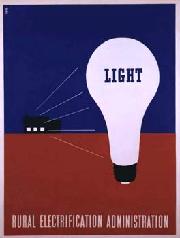
William Langer served on Civil Service, Indian Affairs, and Judiciary Senate committees, among others. He was a champion of rural electrification and telephone service as well as affordable health care. His Senate career was also marked by his reputation as a strict isolationist. He opposed the Lend-Lease Act as well as the extension of Selective Service prior to WWII. He did, however, vote to declare war following the Japanese attack on Pearl Harbor. Despite the lessons learned during WWII, Langer's isolationist philosophy did not change. c. 1934 Federal REA Poster
Langer was also extremely critical of Great Britian's Winston Churchill. In one instance prior to a scheduled visit to the US by now former Prime Minister Churchill, Langer sent a telegram to the pastor of Boston's Old North Church requesting that two lanterns be placed in the belfry to warn Americans that the British were coming. Langer won re-election in 1946 and 1952. Langer also won re-election for a third time in 1958 despite failing health of both he and his wife. Despite not making a single campaign appearance in the state, he carried every county in the state.William Langer died while serving in Washington as a US Senator on November 8, 1959. He is buried in Leo’s Catholic Cemetery in Casselton.
Copy-edited article
Mandan is associated with four of the 31 people who had served as North Dakota governor when this article was written: one was born in the city, one died there, one moved there, and one began his professional career there.
William Langer was born September 30, 1886, on a farm near Casselton to Frank and Mary Weber Langer. One of six children, he grew up in a family involved in county and state politics. His father was also an officer of Casselton's First National Bank.
Langer attended rural schools and graduated as Casselton High School's valedictorian in 1904. He received a bachelor of laws from the University of North Dakota in 1906 and passed the bar examination.
At 18, Langer was too young to practice law in North Dakota, where the minimum age was 21. He continued his education at Columbia University in New York and graduated at the top of his class in 1910. Although offered a position at a prominent New York firm, he returned to North Dakota.
Langer lived at a Mandan boardinghouse at 300 Second Avenue Northwest and worked for Morton County State's Attorney H. R. Bitzing. He served as assistant state's attorney until 1914, when he became state's attorney. On his first day, he issued 167 arrest warrants for liquor dealers and vice operators. He successfully sued the Northern Pacific Railway for $1.25 million in back taxes and gained a reputation as an opponent of corporations.
Langer and Mandan attorney S. L. Nuchols formed Langer and Nuchols in 1915. Langer was elected North Dakota attorney general in 1916, defeating his opponent by more than 58,000 votes and carrying every county. He won reelection in 1918 on the Nonpartisan League ticket.
Langer married Lydia Cady in New York City on February 26, 1918, while serving as attorney general. They had met while he attended Columbia. Langer recalled first noticing Lydia at a concert, arranging a false telephone call to draw her escort away, and introducing himself. The couple had four daughters: Emma, Lydia, Mary, and Cornelia.
In March 1920, Langer sought the governorship as a Progressive Republican. He had left the Nonpartisan League in 1919, accusing its leaders of selling out farmers, and narrowly lost to league candidate Lynn Frazier. Langer returned to law practice, moved the firm to Bismarck, and benefited from his statewide recognition.
He later rejoined the league and helped address its financial troubles. After losing the 1928 attorney-general primary, he secured the 1932 gubernatorial nomination. Langer and the other major league candidates swept that year's election.
As governor, Langer strongly supported farmers. When wheat prices fell, he imposed an embargo on North Dakota wheat until prices improved. He also declared a moratorium on farm foreclosures and used the National Guard to halt sheriff's sales.
Langer soon encountered legal trouble. He removed many state officials, appointed loyalists, and solicited state employees to subscribe to his newspaper at a cost of about 5 percent of their annual salary. Langer regarded the subscriptions as legitimate campaign fundraising, but a federal court convicted him of illegally soliciting contributions, sentenced him to 18 months in prison, and fined him $10,000. The North Dakota Supreme Court removed him from office because of the felony conviction. After three more trials, Langer was acquitted of all charges.
Langer returned as governor from 1937 through 1941 and then won election to the U.S. Senate. Opponents petitioned to prevent him from taking his seat. A Senate committee heard damaging testimony, including Langer's admission that he had paid the son of the judge who presided over two of his 1935 trials. The committee voted 13–3 against seating him, but the full Senate rejected its recommendation by 52–30. The decision made national headlines.
In the Senate, Langer served on the Civil Service, Indian Affairs, and Judiciary committees, among others. He advocated rural electricity and telephone service and affordable health care. A strict isolationist, he opposed the Lend-Lease Act and extending Selective Service before World War II, but voted for war after Japan attacked Pearl Harbor. His isolationism continued after the war.
Langer was sharply critical of Winston Churchill. Before one visit by the former British prime minister, Langer telegraphed the pastor of Boston's Old North Church and asked that two lanterns be placed in its belfry to warn that the British were coming.
Langer won reelection in 1946 and 1952. Despite poor health for both him and Lydia and without making a campaign appearance in North Dakota, he carried every county in 1958. Langer died in Washington on November 8, 1959, while serving in the Senate. He is buried in St. Leo's Catholic Cemetery in Casselton.