Original article
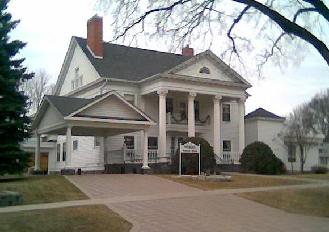
One of the largest Greek Revival homes in North Dakota, it was built in 1899 by Hiram R. Lyon and was and still is considered an outstanding home of the City of Mandan. Located among other historic homes in west central Mandan walking distance north of the location of the (then new) railroad Queen Anne-style passinger depot on land purchased from the Northern Pacific Railway.
The foundation, about 2-1/2 feet thick, is of stacked field rock. Builders used tongue-in-groove subsiding in a diagonal pattern on the outside wall to strengthen the structure. All of the wood was hand cut and much of it had to be ordered specially for the home. When Mr. Lyons built the house, the woodwork was corner sawed white oak. The cabinets in the dining room and the wainscoating was handpainted. Mr. Lyons also had a table and chairs made to match the woodwork. The table seated twenty people.
The house is patterned after southern plantation homes, with massive pillars along the front and at that time included a porte-cochere, the French term for a carriage drive. Passengers were free to enter and disembark from their carriages under the protection of the driveway roof on the south side, away from the winds and snow.
Hiram R. Lyon came to Mandan in 1881 and the 25 years he spent here until 1906-07 were filled with business activities, ranging from the presidency of the First National Bank to founder of the the Mandan Mercantile Company. He also had an active interest in the Mandan Roller Mill and the North Dakota Milling Association. He engaged in the raising of sheep and was responsible for the placement of thousands of head on Morton County farms, on shares.
Other business he established were the Missouri Valley Milling Company (whose premium grade of flour was called “Lyon’s Best”), the Mandan Electric Company, the Mandan and North Dakota Independent Telephone Companies, and the Missouri Valley Grocery.
The home was sold in 1907 to George and Margaret Bingenheimer. Bingenheimer was a prominent local businessman who had established a major lumber and machinery outlet as well as the town's first drug store in 1881.
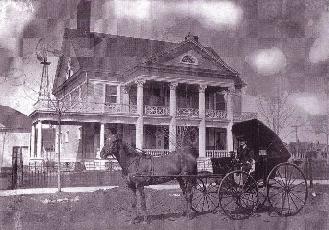
The photo (SHSND C1501) provided shows the Lyon Home c.1906 with their horse-drawn carriage and is used with permission of the State Historical Society of North Dakota.
Mandan attorney, John and Nan Sullivan, they lived in the home with their four children from 1920 to 1944. In 1944, the home was sold to John and Mary Kennelly. In 1951, Paul and Magdalena Schaff lived in the home until 1956. Hector and Margaret Hoenig would remodel the house to begome the Hoenig Funeral Home.
The building was updated in the 1980’s by Tom and Kathy Weigel who own and operate the business today.
More modifications in 2011 incorporated changes, including a 1700 sq ft addition to the north side of the building, to assure the changes would "tie in with the style and the feeling that was already there" including the residential neighborhood. The design of the columns, the bacony rail, the gable end of the roofs and all the trim pieces were carefully copied from archeologists' report of the original design.
Copy-edited article
One of North Dakota's largest Greek Revival houses, the home was built in 1899 by Hiram R. Lyon and has long been regarded as one of Mandan's outstanding residences. It stands among other historic homes in west-central Mandan, within walking distance of the then-new Queen Anne–style Northern Pacific passenger depot, on land purchased from the railroad.
The stacked-fieldstone foundation is approximately two and a half feet thick. Builders strengthened the structure with tongue-and-groove subsiding laid diagonally on the exterior walls. All the lumber was cut by hand, and much of it had to be specially ordered. The interior had quarter-sawn white-oak woodwork, hand-painted dining-room cabinets and wainscoting, and a matching table and chairs. The table seated 20 people.
The house was patterned after Southern plantation homes, with massive pillars across the front. It originally had a porte-cochère—a covered carriage entrance—on the southern side, allowing passengers to enter and leave their carriages under shelter from wind and snow.
Lyon arrived in Mandan in 1881. During his 25 years in the city, he served as president of First National Bank and founded the Mandan Mercantile Company. He also had interests in the Mandan Roller Mill and North Dakota Milling Association. He raised sheep and arranged for thousands of animals to be placed on shares with Morton County farms.
Other businesses he established included the Missouri Valley Milling Company, whose premium flour was called Lyon's Best; the Mandan Electric Company; the Mandan and North Dakota independent telephone companies; and Missouri Valley Grocery.
George and Margaret Bingenheimer purchased the home in 1907. George was a prominent local businessman who had established a major lumber and machinery outlet and the town's first drugstore in 1881.
The historic photograph, used with permission of the State Historical Society of North Dakota, shows the Lyon Home and the family's horse-drawn carriage around 1906.
Mandan attorney John Sullivan and his wife, Nan, lived in the house with their four children from 1920 to 1944. John and Mary Kennelly purchased it in 1944, followed by Paul and Magdalena Schaff in 1951. In 1956, Hector and Margaret Hoenig remodeled the house as Hoenig Funeral Home.
Tom and Kathy Weigel, later owners and operators of the funeral home, updated the building during the 1980s. A 1,700-square-foot addition was constructed on its northern side in 2011. Designers sought to preserve the building's character and its relationship to the residential neighborhood, reproducing the columns, balcony rail, roof gables, and trim from an architectural report documenting the original design.