Original article
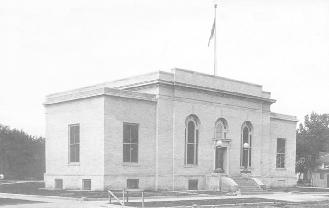
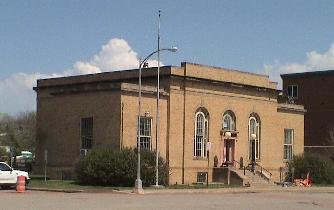
The First Street Federal Building was listed in 1985 on the National Register of Historic Places as a contributing structure within the Mandan Commercial Historic District. The structure was built in 1915 as a US Post Office and was occupied as such until the new post office was constructed and opened in 1962. Ownership of the building was subsequently transferred to the Mandan Library District and housed the library from 1964 until 2003.The First Street Federal Building was designed by James Knox Taylor, FAIA, Supervising Architect (1897-1912) of the US Treasury Department and was designed and constructed concurrently with a similar but slightly smaller building in Wahpeton, ND. Taylor became known as the "National Architect" due to the improved character of designs and construction of federal buildings during his 15-year tenure. By the end of his Federal career, the US Treasury commissioned an average of 10 buildings a month nationwide. James Knox Taylor was involved in the construction of more than 800 federal buildings, thus creating a clearly recognizable, strong federal image across the country. His successor Oscar Wenderoth supervised its construction and commissioning. Taylor worked to harmonize his architecture with local history, climate and environment. He specified native North Dakotan brick for the building. Although smaller and less ornate than other examples of period Federal buildings, the main floor elevation was carefully proportioned to create a dignified and solid character incorporating features such as iron lamps, recessed windows, and elegant archways. Its formal composition relies on the unity of parts, scale, symmetry, rhythm and classical ornamentation for its architectural effect.
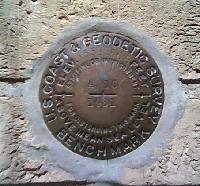
The National Geodetic Survey (NGS) selected this "massive structure" to hold an elevation benchmark in 1931. The survey marker was described as being "installed near the southwest corner of the building on the south wall approximately five feet above the surface." A 1982 NGS survey team was unable to locate it. A bush hid it and the building's cornerstone from view. However a more likely explanation is the team was at the current post office two blocks away. The NGS database was updated in 2007 to report the marker in "good" condition.
It's outer ring contains the text "US COAST & GEODETIC SURVEY BENCHMARK" The second ring states "ELEV 1651.368 FEET ABOVE MEAN SEA LEVEL" and its inner ring states "$250 FINE OR IMPRISIONMENT FOR DISTURBING THIS MARKER."In 1962, the US Postal Service replaced the building and the existing building was turned over to the city's library district. To that point in time, the city's library was housed since 1939 in the basement of the World War Memorial Building (today's City Hall). After remodeling, the building served in this new role until 2004 when the library was moved to the NP Freight House on West Main Street.The city did accept proposals to purchase for the building in 2003. However since remediation of the ground oil plume beneath the downtown area had not started, interested was limited. The city left the building vacant and unheated, angering activists attempting to save the building to claim the city was purposely assuring its "demolition by neglect." It was demolished in January 2008 to make way for additional senior housing.
Copy-edited article
The First Street Federal Building was listed in the National Register of Historic Places in 1985 as a contributing structure in the Mandan Commercial Historic District. Built in 1915 as a U.S. post office, it served that purpose until a new post office opened in 1962. The building was then transferred to the Mandan Library District and housed the library from 1964 through 2003.
James Knox Taylor, supervising architect of the U.S. Treasury Department from 1897 through 1912, designed the building concurrently with a similar but slightly smaller federal building in Wahpeton. Taylor became known as the "national architect" because of improvements in federal design and construction during his 15-year tenure. By the end of his federal career, the Treasury commissioned an average of ten buildings per month nationwide. Taylor participated in the construction of more than 800 federal buildings, helping create a recognizable federal architectural identity. His successor, Oscar Wenderoth, supervised the Mandan building's construction and commissioning.
Taylor sought to harmonize federal architecture with local history, climate, and environment, specifying North Dakota brick for the building. Although smaller and less ornate than many period federal buildings, its main elevation was carefully proportioned to create a dignified, solid character. Iron lamps, recessed windows, and elegant arches contributed to an effect based on unity, scale, symmetry, rhythm, and classical ornament.
The National Geodetic Survey selected the "massive structure" to hold an elevation benchmark in 1931. The marker was installed near the building's southwestern corner, on the southern wall approximately five feet above ground. A 1982 survey team could not locate it, reportedly because a bush concealed both the marker and cornerstone. Another possible explanation is that the team searched the current post office two blocks away. The database was updated in 2007 to report the marker in good condition.
The marker's outer ring reads "U.S. Coast & Geodetic Survey Benchmark." The second ring records an elevation of 1,651.368 feet above mean sea level, and the center warns of a $250 fine or imprisonment for disturbing it.
After the post office moved in 1962, the building was transferred to the city library district. Since 1939, the library had occupied the basement of the World War Memorial Building, now City Hall. Following remodeling, the former post office served as the library until 2004, when the collection moved to the Northern Pacific Freight House on West Main Street.
The city solicited purchase proposals in 2003, but interest was limited because remediation of the downtown petroleum plume had not begun. The vacant building was left unheated, prompting preservation advocates to accuse the city of allowing demolition by neglect. It was razed in January 2008 for additional senior housing.