Original article
In the early days of statehood, the main commercial transportation route was the Missouri River. Even after the the advent of the railroad in the 1880s, the river still served as the main north/south route until the mid-1930s and the development of the national highway system.
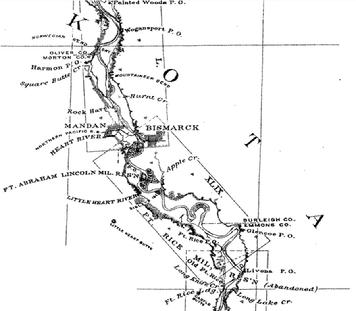
Steamboats used coal for fuel and when coal ran out, they used wood sometimes bought from farmers along the river. One refueling point was originally owned and operated by James Bellows (future president of Mandan's first Village Board elected in 1882). Originally known as Bellow's Landing, it was located seven miles northwest of what would later become downtown Mandan and included an icehouse. Historical records suggest the area started to serve steamboat traffic as early as 1832 when the riverboat Yellowstone reached Fort Union. Regular steamboat service on the Missouri began in 1860. Click to Enlarge - 1894 Corps of Engineers River Plat
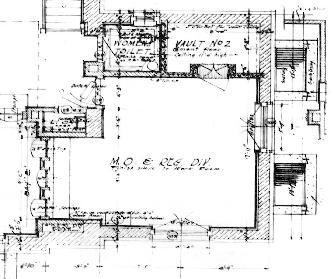
Click to Enlarge However the harbor was renamed "Rock Haven" when the US government took over the operation in the late 1870s . The Army Corps of Engineers made extensive riverside improvements, including adding dry-dock and boat repair facilities. It supported the supply ships for the US Army's frontier forts. It was credited as the best landing on the river. Unlike most river harbors, the area was permanent and safe even during spring river ice breakup. When the government designed a new building / Post Office for Mandan in 1912, space was included for the harbormaster's office.
Snag boats were a vital part of river traffic. "Snags," usually trees, would catch in the river. Stumps would be cut off and the rest to float harmlessly down the stream. If the trees were too big they would be dynamited and cut in two.
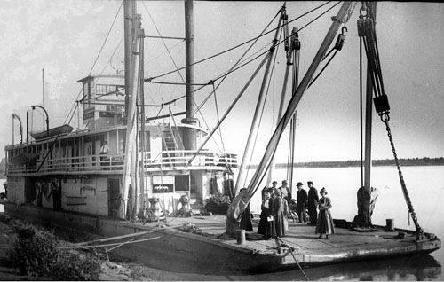
The paddlewheel "Mandan" was a government snag-boat launched in June 1893 from from a boat yard in Yankton, SD. It operated between Williston, ND and Sioux City, IA. Its mission was to keep the river channel clear to the many commercial boats that plied the Missouri. The steel-hulled snag-boat was equipped with ropes, pulleys, chains and large hooks, would move up steam, and in the manner catch the snags and pull them loose. 1912 US Corps Engineers Snagboat "Mandan"
Well known boats of that era were many: the freighter Josephine (constructed at the same time as the Mandan at Yankton), the Far West and the Jon Ordway plus a wide assortment of keel boats, dugouts, buffalo-skin bull boats and long flat bottom mackinaws.
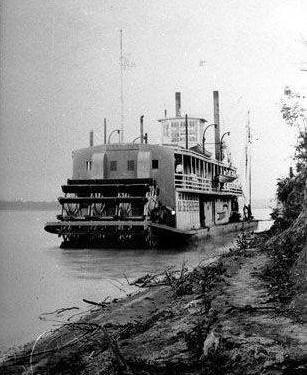
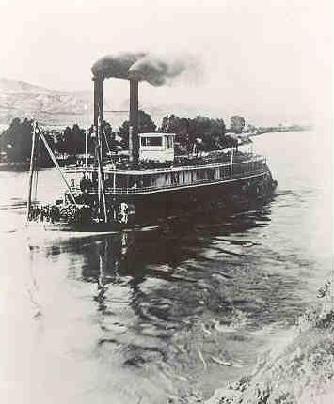
1907 Mandan traversing Missouri River 1855 Steamship operating on the Missouri River
John D. Anderson was harbormaster at Rock Haven for over 25 years. But as the importance of steamboat transportation wained in the 1920s, the activity at Rock Haven slowed to a halt.
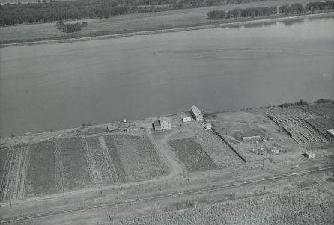
Anderson's daughter Mary met and later married Charles Wunders. Wunders spent over 35 years on the river as an engineer on the snagboat Mandan. Eventually Wunders and his wife Mary retired to the Sioux City Iowa area. John Anderson finished his government career supervising bank stablization projects for the US Army Corps of Engineers, including the placement of rip-rap along the bank at Rock Haven. He and his wife Alma (Bruns) lived at a residence at the harbor. But after Anderson's death in 1934, Rock Haven was dismantled and sold. 1955 Rock Haven Reclaimed
The site was closed to river service and sold to the Zachmeier family who live near by. The southern portion of the property was sold to Montana Dakota utilities in 1953 for the utility to build a coal-fired power station i.e. Heskett Plant in 1954.
Copy-edited article
During North Dakota's early statehood, the Missouri River was the region's principal commercial transportation route. Even after the railroad arrived in the 1880s, the river remained an important north–south route until development of the national highway system in the mid-1930s.
Steamboats burned coal and, when coal was unavailable, wood purchased from farmers along the river. One refueling point was owned by James Bellows, who became president of Mandan's first village board in 1882. Bellows Landing, seven miles northwest of what became downtown Mandan, included an icehouse. Historical records suggest that the area served steamboats as early as 1832, when the Yellowstone reached Fort Union. Regular Missouri River steamboat service began in 1860.
The harbor was renamed Rock Haven after the U.S. government assumed control in the late 1870s. The Army Corps of Engineers added dry-dock and boat-repair facilities to support supply ships serving the Army's frontier forts. Considered the river's best landing, the site remained permanent and safe during the spring ice breakup that threatened most harbors. Mandan's new federal building and post office, designed in 1912, included space for the harbormaster.
Snagboats were essential to river traffic. Crews cut off tree stumps caught in the channel so the remaining wood could float harmlessly downstream; exceptionally large trees were dynamited and cut apart.
The government paddlewheel snagboat Mandan was launched at Yankton, South Dakota, in June 1893. Operating between Williston, North Dakota, and Sioux City, Iowa, it kept the channel clear for commercial traffic. Using ropes, pulleys, chains, and large hooks, its crew steamed toward snags, caught them, and pulled them free.
Other well-known vessels included the freighters Josephine, built at Yankton at the same time as the Mandan, Far West, and John Ordway, along with keelboats, dugouts, buffalo-hide bullboats, and flat-bottomed mackinaws.
John D. Anderson served as Rock Haven's harbormaster for more than 25 years. Activity declined as steamboat transportation waned during the 1920s.
Anderson's daughter Mary married Charles Wunders, who spent more than 35 years as an engineer aboard the Mandan. The couple eventually retired near Sioux City, Iowa. Anderson concluded his government career supervising Army Corps of Engineers bank-stabilization work, including placement of riprap at Rock Haven. He and his wife, Alma Bruns Anderson, lived at the harbor. After Anderson died in 1934, the facilities were dismantled and sold.
The Zachmeier family, who lived nearby, purchased the closed site. In 1953, they sold the property's southern portion to Montana-Dakota Utilities, which built the coal-fired Heskett Plant there in 1954.