Original article
In the days before on-demand home delivered movie, residents had to leave the comfort of their couch and witness entertainment live. In today's society, such activities are deemed for the social elite. However in the heyday of the early 20th Century, specifically the 1910s-1920s, everyone went to "the theatre" intitally for live entertainment like vaudville acts, and eventually to a more passive views of "moving pictures."
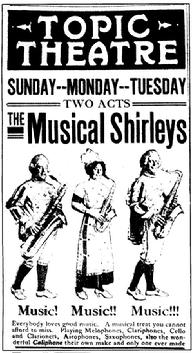
In 1909, the Topic Theater, located one block west of the InterOcean Hotel (site of today's Lewis and Clark Hotel Apartments), installed an electric sign to help promote their nightly variety shows. The venue included "moving pictures" accompanied by music provided by the local Imperial Orchestra. Other varient actis included Fredric, the Great Magician, Miss LaMable, the Great Serpertine Dancer, and Jack Symonds, the Tramp Monologist. One screen. Later named the Family Theater.
Located 504 W Main, the Topic Theatre (later renamed the Family Theater) originally opened as a live entertainment venue. With the advent of talkie moving pictures, a screen was added by Harry L. Hartman in 1915 after buying the building in late 1914. Frank Gilbreath had taken over management of the facility from Edwin H Wuerst & Paul R Foster in early 1914.
Copy-edited article
Before movies could be delivered to the home on demand, Mandan residents left their living rooms to experience entertainment in person. During the early twentieth century, particularly the 1910s and 1920s, people from across the community attended theaters first for live vaudeville and variety acts and later for moving pictures.
In 1909, the Topic Theatre, one block west of the InterOcean Hotel, installed an electric sign advertising its nightly variety shows. Moving pictures were accompanied by the local Imperial Orchestra. Other performers included Fredric, the Great Magician; Miss LaMable, the Great Serpentine Dancer; and Jack Symonds, the Tramp Monologist.
The Topic, at 504 West Main Street, opened as a live-entertainment venue and was later renamed the Family Theater. Frank Gilbreath assumed management from Edwin H. Wuerst and Paul R. Foster in early 1914. Harry L. Hartman purchased the building late that year and added a movie screen in 1915 as motion pictures grew in popularity.