Original article
Early Mandan leaders understood the stability a Federal facility could bring to the economy of the area. In 1908, they had a bill introduced in the US Congress for an Indian school. The legislation passed, but Bismarck businessmen maneuvered a way to get it built on their side of the Missouri; since there was no bridge connecting the two cities at that time. Needless to say, Mandan promoters did not welcome the turn of events.
Business leaders understood the success of farmers and ranchers was crucial to their success. While the early Dakota settlers brought with them their favorite seeds and plantings for raising fruit, vegetables, grains and trees from their prior homes, many varieties did not thrive in growing conditions found on the high dakota prairie. Efforts to secure a Federal facility subsequently turned to the agricultural industry of the region.A. E. Thorberg, W. A. Lanterman and C. L. Timmerman pushed for an agricultural experiment station after a priairie fire devastated many acres of land. They lobbied the U.S. Congress for a research lab to develop improved plant strains the following year. The bill failed, as it did again in 1911. Finally in August 1912, a bill passed to establish the Northern Great Plains Research Laboratory. However, funding the facility was a separate effort.Mandan businesses pooled their resources and purchased land for the new facility at approximately $32 per acre. Among them were a bank, several mercantile companies, a drugstore, an insurance company, a newspaper, a clothing store and a tailor. Major James Hanley, a prominent area politician, got ND to reimburse them, and the land became property of the State – which leased it to the federal government for 99-years.
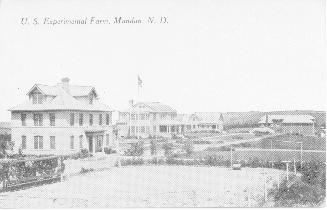
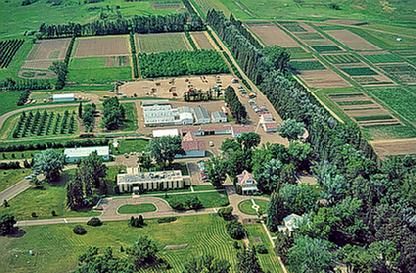
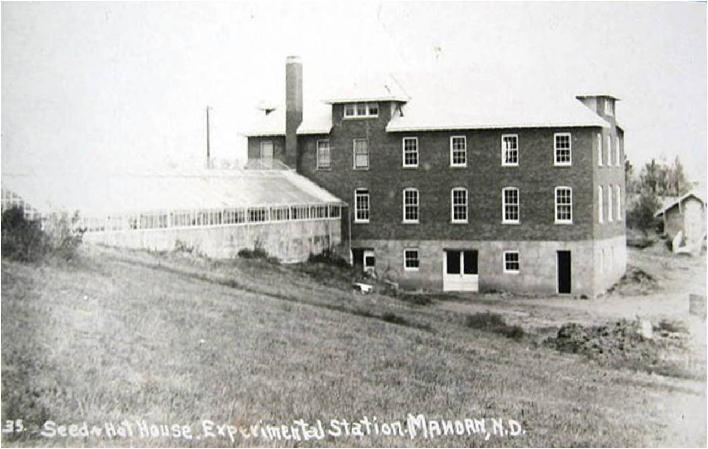
Mandan scientists broke sod in 1913 and planted several blocks of trees in 1914. But there was a problem; the facility was paid for, but nothing had been appropriated for research. J. C. Brinsmeade, the first agronomist, had to buy equipment and hire people out of his own pocket.The first buildings at the Northern Great Plains Experiment Station were erected in the spring of 1913, and a wind break, a quarter mile long and fourteen rows wide, was planted at that time.
Robert Wilson took out newspaper ads offering landowners saplings and growing plans through the Windbreak Tree Program, and more than 4,000 landowners applied. Wilson and five forestry students inspect each site, traveling by horse and buggy, train, and automobile, and the following spring, more than 1,300 farms in ND, SD, WY and MT planted windbreaks. In the years that followed, fruit breeding led to hardier strains of apples, plums and apricots. Improved varieties of vegetables led to the formation of local seed companies like the Oscar Will Company. Research on grains and other crops led to better drought and disease resistance.
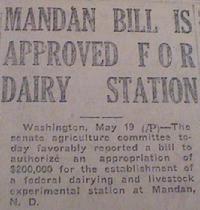
Dairy herds, too, improved because of the lab’s research into feeding, breeding and management practices. Although the dairy program ended in 1955, participating farms in Morton and Emmons County still lead the state in diary production today. In 1935, during the Great Depression, Congress withdrew funding for agricultural research, but Mandan businessmen weren’t interested in letting go; they got more than 4,000 windbreak tree recipients to contact Congress, and appropriations for the lab were restored. Sixty years later, in 1996 and ‘97, funding was again deleted from the federal budget. And, once more, farmers and ranchers mobilized to save the lab, and funding was restored.
Mandan owes much to A. E. Thorberg as the promoter, and to Congressman L. B. Hanna and Senators Gronna and McCumber as the represetatives in Congress, who were successful in obtaining the appropriation necessary for the present Northern Great Plains Experimental Station. This Station today maintains the honor of being the largest Federal dry land experimental station in the nation, outside of Beltsville, MD.
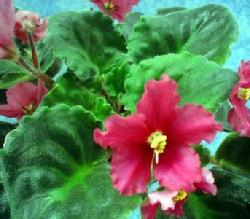
Dry land farming in all of its phases is carried on at the Station, as well as the development of new grains and fruits. A few of the fruits which have been developed at the station and released for commericial use include five varieties of apples, three of crabapples, four plums, two cherry plums, one apricot and varieties of currants. New varieties of vegetables have also been developed.While the focus now and in the recent past remain with food varities, some hardy flower varieties have also been released.
A Bismarck-based seed company, Oscar H. Will and Company, benefited greatly by its proximity to the Experiment Station. An article on the history of this company can be found on the Farm Collector website: Link: http://www.farmcollector.com/farm-life/Seed-Corn-to-Shelterbelts.aspx
The Station has a high place in history for the advances made in the production of many foods. The Northern Great Plains Research Laboratory has now taken on an additional role, advancing knowledge of "green energy" by conducting research on carbon sequestration and developing switch grass varieties for potential ethanol fuel feedstocks. Other current research projects including improving the nutritional value of beef, using fewer production steps while increasing crop yields and creating new forage cultivars.
Copy-edited article
Early Mandan leaders understood the economic stability that a federal facility could bring to the area. In 1908, they had a bill introduced in Congress to establish an Indian school. The legislation passed, but Bismarck business leaders maneuvered to have the school built on their side of the Missouri River, which had no bridge connecting the two cities at the time. Mandan's promoters did not welcome the outcome.
Business leaders also understood that their own success depended on the success of farmers and ranchers. Early Dakota settlers brought favorite varieties of fruits, vegetables, grains, and trees from their former homes, but many did not thrive under conditions on the high prairie. Efforts to secure a federal facility therefore turned toward regional agriculture.
A. E. Thorberg, W. A. Lanterman, and C. L. Timmerman pressed for an agricultural experiment station after a prairie fire devastated many acres. They lobbied Congress the following year for a research laboratory that would develop improved plant strains. The bill failed, as it did again in 1911. A bill establishing the Northern Great Plains Research Laboratory finally passed in August 1912, although funding the facility required a separate effort.
Mandan businesses pooled their resources and purchased land for approximately $32 per acre. The contributors included a bank, several mercantile companies, a drugstore, an insurance company, a newspaper, a clothing store, and a tailor. James Hanley, a prominent area politician, persuaded the state to reimburse them. The land became state property and was leased to the federal government for 99 years.
The first buildings were erected in spring 1913, when workers also planted a windbreak a quarter-mile long and 14 rows wide. Scientists broke sod that year and planted several blocks of trees in 1914. Although the facility had been established, Congress had appropriated no money for research. The first agronomist, J. C. Brinsmeade, initially purchased equipment and hired workers with his own money.
Robert Wilson placed newspaper advertisements offering landowners saplings and planting plans through the Windbreak Tree Program. More than 4,000 landowners applied. Wilson and five forestry students inspected each site, traveling by horse and buggy, train, and automobile. The following spring, more than 1,300 farms in North Dakota, South Dakota, Wyoming, and Montana planted windbreaks.
In later years, fruit breeding produced hardier apples, plums, and apricots. Improved vegetables helped support local seed companies such as Oscar H. Will and Company, while research on grains and other crops produced greater resistance to drought and disease.
The laboratory's research into feeding, breeding, and management practices also improved dairy herds. Although the dairy program ended in 1955, participating farms in Morton and Emmons counties continued to lead the state in dairy production.
Congress withdrew funding for agricultural research in 1935, during the Great Depression. Mandan business leaders enlisted more than 4,000 recipients of windbreak trees to contact Congress, and the laboratory's appropriation was restored. Funding was removed from the federal budget again in 1996 and 1997. Farmers and ranchers again mobilized to save the laboratory, and its funding was restored.
Mandan owed much to Thorberg's promotion of the station and to Representative L. B. Hanna and Senators Asle Gronna and Porter J. McCumber, who helped obtain the necessary congressional appropriation. The Northern Great Plains Experiment Station became the nation's largest federal dryland experiment station outside Beltsville, Maryland.
The station conducted research into all phases of dryland farming and developed new grains, fruits, and vegetables. Commercially released fruits included five apple varieties, three crabapples, four plums, two cherry plums, an apricot, and several currants. Although its principal focus remained food crops, the station also released hardy flower varieties.
Bismarck-based Oscar H. Will and Company benefited from its proximity to the experiment station. An article about the seed company's history is available from Farm Collector.
The station has played an important role in advancing food production. The Northern Great Plains Research Laboratory later assumed an additional role in green-energy research, including carbon sequestration and switchgrass varieties for potential ethanol feedstocks. Other projects included improving the nutritional value of beef, reducing production steps while increasing crop yields, and creating new forage cultivars.