Original article
The first public school classes were held in Mandan's first City Hall which was located in the 200 block of Anhurst Avenue (today's First Avenue NW). However, some local historians claim the instruction took place at the city's first courthouse in the Spring of 1877. Total enrollment was 12. Over the next few years, the school was moved from a log cabin owned by J.J. Mitchell (1879) to the Methodist church basement in 1880 to the Presbyterian church basement in 1881. The Mandan School District (also known then and today as Morton County District #1) was formally organized on April 23, 1881 at a meeting of town leaders held in the Methodist Church. By 1882, enrollment swelled to 60 students.
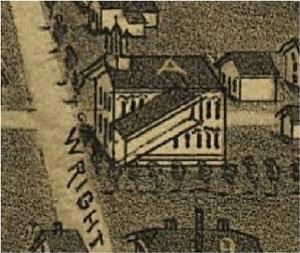
The first schoolhouse was constructed in the Fall 1881 on the southeast corner of Wright Avenue (today's First Avenue NE) and Second Street NE. Completed in 1882, the cost of the building was over $4,000 (about $133,000 in 2025 dollars). Built "in the approved modern style, is of two stories with a belfry and bell, and has large and commodious hall and stairway. The interior is supplied with the best style of desks and blackboards." The school was initially divided into two grades and in 1883 both grades were full.
First school board directors were Daniel Flynn, Dr. Henry W. Coe, treasurer, and Frank J. Mead. They approved a 26x30 foot addition was built at a cost of $2000 with $1600 in furniture. By 1884, the school was serving 60 pupils and the course of study covered six years. In 1887, with the city's population nearing the 2,500 mark, the school board began renting the Vinton Building in the City's Third Ward as an additional school. Professor Alexander Strahan was principal for both schools in 1888.
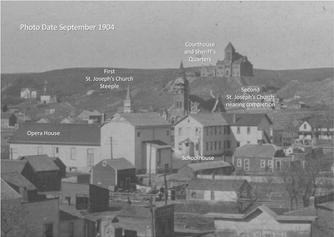
The second schoolhouse was opened on the west side of town in 1890 near Mitchell Avenue (today's Eighth Avenue NW) and Main Street and was referred to as the West End School. The building was a two room, two story building converted from a house. Miss Margaret Bowers (later to become Mrs. George Bingenheimer) was primary teacher and principal and taught in the room on the ground floor. She taught first and second grades, had about 25 pupils and received $55 a month in salary. The other teacher, Miss Ida Ellison taught the third, fourth and fifth grades. Citywide, all sixth graders would remain in the two-story Wright Street school which they would share with east-site first through fifth graders. That 1882 building, located near St. Joseph's Catholic Church, would hence forth be referred to as the "East End School."
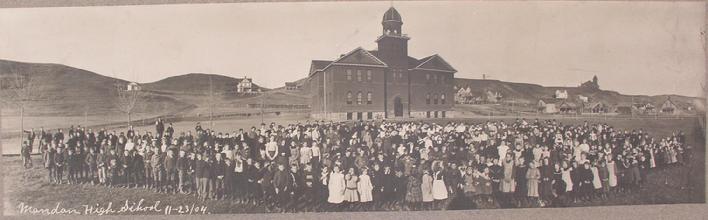
In 1899, the Mandan Board of Education presided by C. E. Draper with members T. A. Cummins, J. H. McGillic, H. H. Harmon and H. D. Stevenson set to the voters a bill to approve construction of a $15,000 (about $581,000 in 2025 dollars) three-story brick "Central School" to house the junior and senior high students as well as provide a new, larger grade school for west part of the city. More history on this building is available at http://www.mandanhistory.org/goneforever/centralschool.html/
In April 1909, the East End school house was moved by William Huff to "Dogtown" (a common reference to the southeast neighborhoods.) It was placed on the curve in the road leading to the Heart River Bridge to serve the city south of the railroad yard. The School Board decided to erect a replacement school building. In the interim, classes were held again at City Hall. In February 1910, the School Board instructed local architect C.A. Bloom to prepare plans for a new two-story and basement school house to be erected in the east end of town. The school was to be of brick and to contain four recitation rooms and an office. Early estimates, incuding plumbing and heating apparatus, expected the cost to top $15,000 (about $518,000 in 2025 dollars).
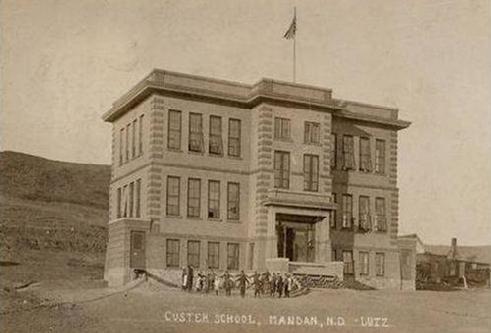
In April 1912, the city celebrated the opening of a new school in the First Ward named after General George Custer. The dedication ceremony included speeches by Judge James Hanley, Sr. summarizing key points in Custer's life and State's Attorney William Langer who made his short address in German intended for the parents.
The district's school-age population, driven both the city's growth and increasing emphasis on more years of education, demanded additional space. The center of town location prompted additional buildings at the "Central School" site. The first addition occurred in 1911 with the addition of new high school on the west edge of the lot. A new gymnasium was added in 1919.
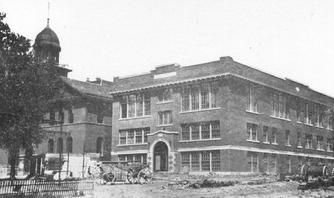
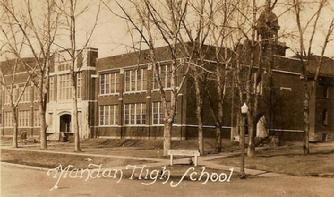
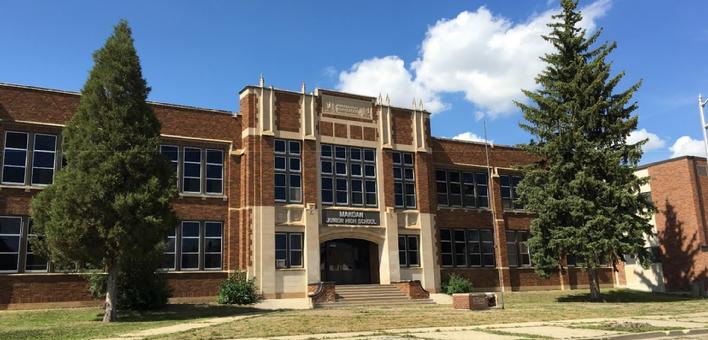
In 1934, high school classes were transferred to a larger high school building designed by Gilbert Horton in the Tudor / Gothic style. Horton, originally from St. Paul, Minnesota relocated to Jamestown in 1911, eventually designing 254 different school buildings in North Dakota. The new school buildng was constructed on the same lot infront of the "Central School." The east-side building was then re-purposed as the junior high school. All the space in the Central School building would function as a grade school. Additional details on the complex, are found at http://mandanhistory.org/arealandmarks/greatplansaccademy.html
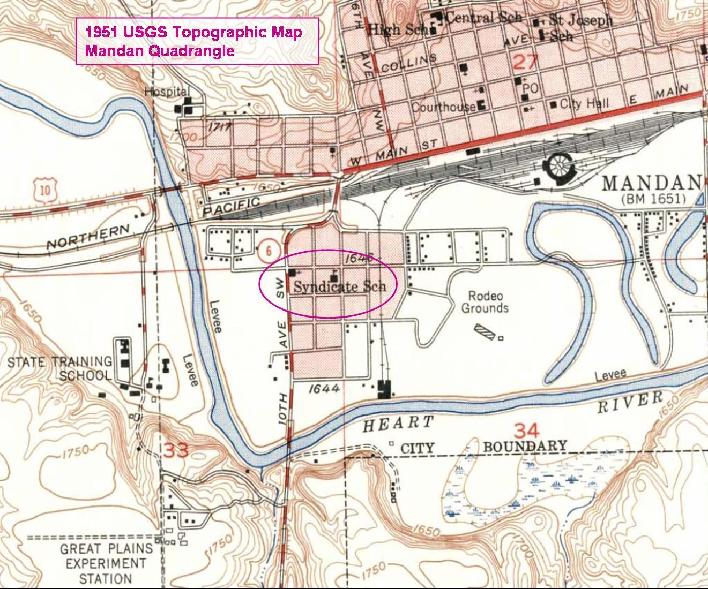
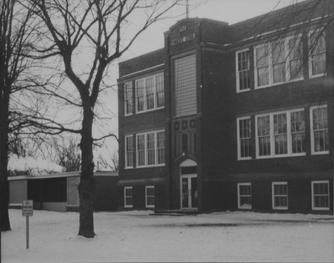
The Syndicate School was constructed in 1922 in southwest Mandan, referring to that area of town developed under the direction of the "Boston Syndicate," a group of East Coast investors including Henry Endicott. The three story (half basement and two stories) brick building was common layout of the time. A wing with additional classrooms was added in 1964. The school was renamed "Mary Stark Elementary School" in 1960 after the death of a long time and beloved teacher. The original structure was razed and replaced with a more modern facility in 1970, and dedicated in January 1971, essentially as it stands today.
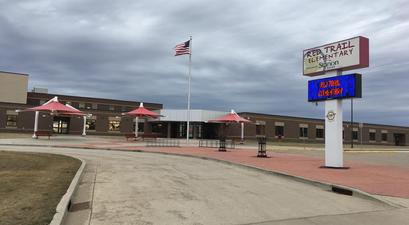
Parents and children in northwest Mandan and surrounding rural areas celebrated the opening of Red Trail Elementary School in August 2014. The school, designed with two sections of each grade from kindergarden to fifth, was completely full on its first day of operation. For the 2018 school year, the district experienced an enrollment increase of 200 students, with the majority in north Mandan.
In July 2019, construction began on an eight-classroom addition to the school to add an additional section of each grade at a cost of $2 million. The two additional classrooms will accommodate spilting two grades into an additional section each as demographics dictate. The additional space is scheduled for completion in August 2020.
Copy-edited article
Mandan's first public school classes were held in the city's first City Hall, located in the 200 block of Ashurst Avenue, today's First Avenue NW. Some local historians, however, claim that instruction began in the city's first courthouse in spring 1877. Total enrollment was 12. Over the next few years, classes moved to a log cabin owned by J. J. Mitchell in 1879, the Methodist church basement in 1880, and the Presbyterian church basement in 1881. The Mandan School District, then and now known as Morton County District No. 1, was formally organized on April 23, 1881, during a meeting of town leaders at the Methodist church. By 1882, enrollment had grown to 60 students.
The first schoolhouse was constructed in fall 1881 at the southeast corner of Wright Avenue, today's First Avenue NE, and Second Street NE. Completed in 1882, it cost more than $4,000 (about $133,000 in 2025 dollars). It was described as built "in the approved modern style, is of two stories with a belfry and bell, and has large and commodious hall and stairway. The interior is supplied with the best style of desks and blackboards." The school was initially divided into two grades, and both were full by 1883.
The first school board directors were Daniel Flynn; treasurer Dr. Henry W. Coe; and Frank J. Mead. They approved a 26-by-30-foot addition costing $2,000, plus $1,600 for furniture. By 1884, the school served 60 pupils and offered a six-year course of study. In 1887, as the city's population approached 2,500, the school board began renting the Vinton Building in the Third Ward for an additional school. Professor Alexander Strahan was principal of both schools in 1888.
A second schoolhouse opened on the west side of town in 1890 near Mitchell Avenue, today's Eighth Avenue NW, and Main Street. Known as the West End School, it was a two-room, two-story building converted from a house. Miss Margaret Bowers, later Mrs. George Bingenheimer, was the primary teacher and principal. She taught first and second grades to approximately 25 pupils in the ground-floor room and earned $55 per month. Miss Ida Ellison taught third, fourth, and fifth grades. All sixth graders attended the two-story Wright Street school alongside east-side first- through fifth-graders. The 1882 building, near St. Joseph's Catholic Church, thereafter became known as the East End School.
In 1899, the Mandan Board of Education, presided over by C. E. Draper, included T. A. Cummins, J. H. McGillic, H. H. Harmon, and H. D. Stevenson. The board asked voters to approve construction of a $15,000 (about $581,000 in 2025 dollars), three-story brick Central School to house junior and senior high school students and provide a larger grade school for the west side.
In April 1909, William Huff moved the East End School to "Dogtown," a common name for the southeastern neighborhoods. The building was placed on the curve leading to the Heart River bridge to serve the city south of the railroad yard. The school board decided to construct a replacement, and classes temporarily returned to City Hall. In February 1910, the board instructed local architect C. A. Bloom to prepare plans for a new two-story brick schoolhouse with a basement, four recitation rooms, and an office. Early estimates, including plumbing and heating, placed the cost above $15,000 (about $518,000 in 2025 dollars).
In April 1912, the city celebrated the opening of a new First Ward school named for General George Custer. The dedication included a speech by Judge James Hanley Sr. summarizing Custer's life and a short address in German by State's Attorney William Langer, intended for parents.
The district needed more space as both the city and the number of years students spent in school grew. Central School's downtown location prompted additional construction at the site. A new high school was added at the west edge of the lot in 1911, followed by a gymnasium in 1919.
In 1934, high school classes moved to a larger Tudor-Gothic building designed by Gilbert Horton. Horton, originally from St. Paul, Minnesota, relocated to Jamestown in 1911 and eventually designed 254 school buildings in North Dakota. The new school was constructed on the same lot in front of Central School. The former high school building on the east side became the junior high school, and Central School was used entirely for elementary grades. The complex later became Great Plains Academy.
Syndicate School was constructed in 1922 in southwest Mandan, an area developed under the direction of the Boston Syndicate, a group of East Coast investors that included Henry Endicott. The brick building's three levels—two stories and a half basement—followed a common layout of the period. A classroom wing was added in 1964. In 1960, the school was renamed Mary Stark Elementary School after the death of Mary Stark, a longtime, beloved teacher. The original structure was razed and replaced with a modern facility in 1970. The replacement was dedicated in January 1971 and remains substantially unchanged today.
Parents and children in northwest Mandan and the surrounding rural area celebrated the opening of Red Trail Elementary School in August 2014. Designed with two sections for each grade from kindergarten through fifth, the school was full on its first day. During the 2018 school year, district enrollment increased by 200 students, with most of the growth occurring in north Mandan.
Construction began in July 2019 on an eight-classroom, $2 million addition. The project would add one section for each grade, while two extra classrooms would allow two grades to be divided into additional sections as demographics required. Completion was scheduled for August 2020.